Black Water Damage in Stones Crossing: Category 3 Emergency Cleanup
If you are reading this with sewage on your floor or contaminated floodwater seeping through your Stones Crossing home, you need answers fast, not a lecture. Black water is the worst category of water damage you can face. It carries bacteria, viruses, fungi, and chemical contaminants that can make your family sick within hours of exposure. The IICRC classifies it as Category 3, which means every porous material it touches is presumed contaminated until a trained technician proves otherwise.
At Stones Crossing Water Restoration, we have been responding to Category 3 emergencies across Central Indiana since 2018. We are IICRC certified, BBB A+ rated, and we work directly with your insurance adjuster so you are not stuck translating restoration jargon at midnight. This post walks through the specific problems black water creates and exactly how we solve each one. If your situation does not match what we describe, or if we are not the right fit for your job, we will tell you directly and point you somewhere that is. Right now your priority is getting people and pets out of the affected area, shutting off power to that zone if it is safe to reach the breaker, and calling a certified crew. Everything else, from insurance paperwork to material decisions, can wait until trained hands are on site assessing the contamination level in your Stones Crossing property.
What Actually Makes Water "Black" Under IICRC Rules
The phrase Category 3 sounds clinical, but in plain English it means the water is grossly contaminated and carries pathogens, bacteria, viruses, and often raw sewage. The IICRC S500 standard, which is the document our industry uses to define right and wrong in water restoration, identifies three sources that almost always qualify. The first is sewage backing up through a floor drain, toilet, or sink from the municipal main or a failed septic system. The second is rising surface water from a storm or flash flood event, which is unfortunately common after spring storms roll across Marion, Hamilton, and Hendricks counties. The third is any water that started clean or grey but sat untreated for more than 48 to 72 hours, because at that point bacterial growth has converted it into something biohazardous regardless of where it began.
That last point catches a lot of Stones Crossing homeowners off guard. A washing machine supply line that burst on Friday afternoon while you were at the lake is clean water on Friday, grey water by Saturday night, and black water by Monday morning. The clock matters. If you are reading this and the water has been sitting longer than two days, treat it as Category 3 until a professional confirms otherwise, and keep pets and kids out of the affected area. Temperature plays a role too. A basement that sits at 72 degrees with stagnant water becomes a bacterial incubator far faster than a cool crawlspace, and finished basements with carpet, upholstered furniture, and cardboard storage boxes give microbes endless surfaces to colonize. By the time you smell that distinct sewer odor, the contamination has typically already wicked several inches up your drywall and into the subfloor.
Get a Category 3 Response That Protects Your Home and Your Claim
Black water is not a job for shop vacs and bleach. It needs trained technicians, proper containment, and documentation that holds up with your adjuster. Stones Crossing Water Restoration runs 24 7 emergency response across Stones Crossing with IICRC certified crews, biohazard disposal, and direct insurance billing on approved claims. Call us when the water is still standing, not after you have tried to handle it yourself. If we cannot help, we will tell you directly and point you to someone who can.
What Our Response Looks Like in the First Few Hours
When you call Stones Crossing Water Restoration, a real person picks up. We dispatch a crew to most Stones Crossing addresses within 2 hours, faster if you are inside the I-465 loop. The first thing our lead tech does is identify the source, because nothing else matters until the water stops coming in. If a sewer main backed up, we coordinate with your plumber or the municipal line. If a sump pump failure contributed to the flooding, we address that next so the basement does not refill while we are extracting.
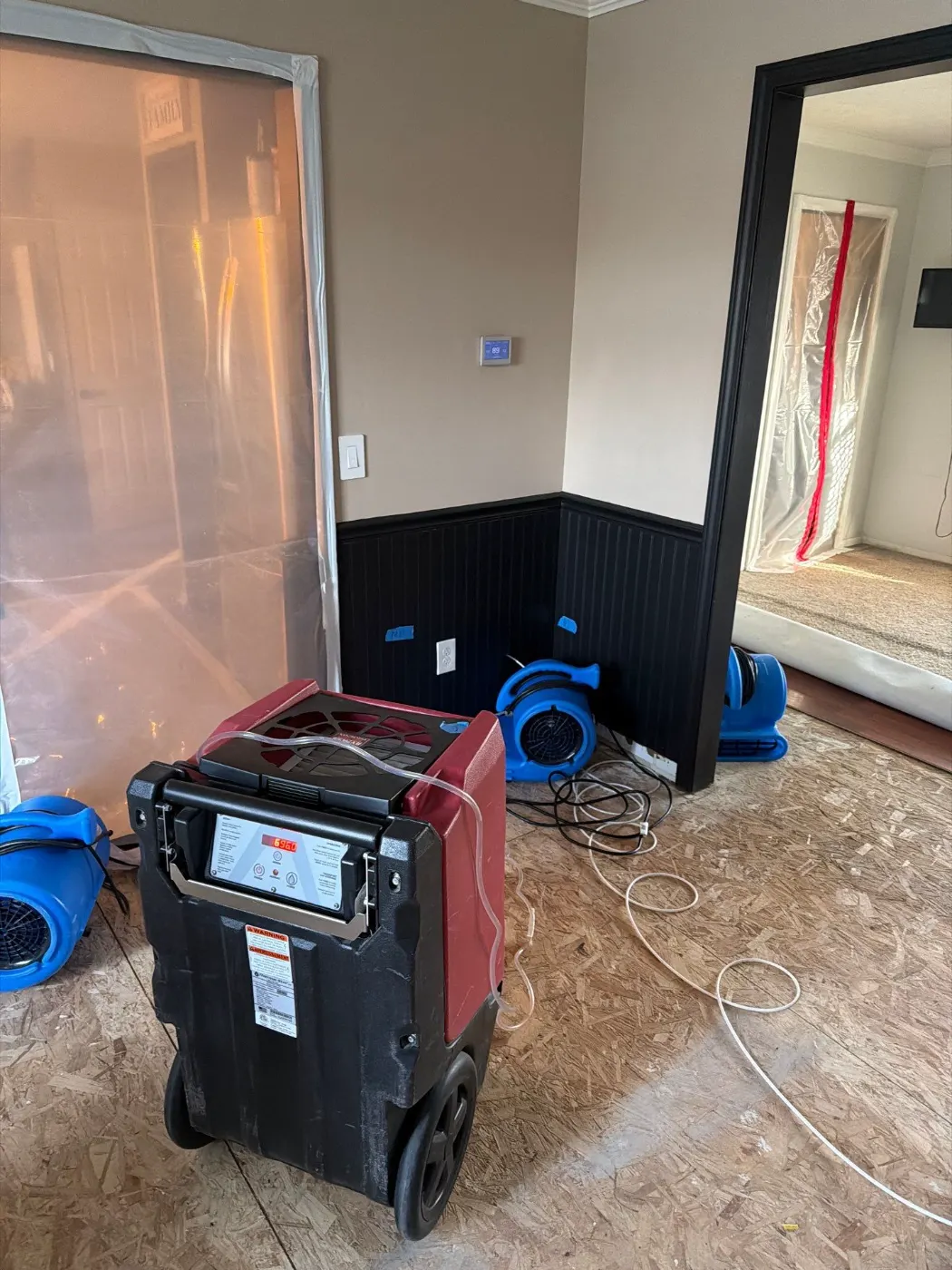
Extraction comes second, using truck mounted or portable units depending on access. We pull out contaminated water, then any porous materials that cannot be salvaged under S500 rules, which generally means carpet, pad, particleboard, and the bottom 12 to 24 inches of drywall in affected rooms. Hard surfaces, framing lumber, concrete, and tile can usually be cleaned, treated with an EPA-registered antimicrobial, and saved. After removal, we set commercial air movers and dehumidifiers, typically 6 to 12 units for an average residential basement, and monitor moisture readings daily until the structure hits drying targets.
Containment is the step homeowners rarely think about but always appreciate once they see it in action. Before we start any aggressive extraction or demolition, we seal off the work area with 6-mil poly sheeting and run negative air machines that pull contaminated air through HEPA filtration and exhaust it outside. That keeps bacteria, odor, and airborne debris from migrating up the stairs into living spaces, through return air vents, and into closets where soft goods would otherwise absorb the contamination. We also bag and tag every piece of unsalvageable material, label it as biohazard waste, and dispose of it according to Indiana regulations rather than tossing it in your curbside bin.
Pricing for Category 3 work in Stones Crossing typically runs from $4,500 on a small contained loss to $15,000 or more for a fully flooded finished basement, and most homeowner policies cover sewage backup if you carry the specific endorsement. We bill insurance directly, document to Xactimate standards, and walk you through the claim process if this is your first time filing. If you want a clearer picture of what an adjuster will see when they arrive, our breakdown of sewage backup cleanup and restoration goes deeper on scope and timeline.
After the Cleanup, Before the Rebuild
Once the structure is dry and decontaminated, we perform a post remediation verification that includes ATP swab testing on hard surfaces, final moisture mapping, and a written clearance report. That document is what your contractor needs before installing new drywall, flooring, and trim, and it is what your insurance carrier needs to release the rebuild portion of your claim. We can handle the reconstruction in house or coordinate with a contractor you already trust, and either way our goal is to hand your home back to you in the same condition it was the morning before the backup happened.
Why You Cannot DIY a Sewage Backup
We say this with respect for the capable, hands on homeowners we meet all the time in Stones Crossing: black water cleanup is not a weekend project. The contaminants in Category 3 water include E. coli, hepatitis A, giardia, salmonella, and a long list of bacteria that cause illness through skin contact, inhalation of aerosolized droplets, or cross contamination with surfaces your family touches every day. Standard shop vacs do not contain those pathogens, household disinfectants do not penetrate porous materials like drywall and carpet pad, and bleach actively damages the antimicrobial agents we use to break down biofilm. When our crews respond, we arrive in personal protective equipment with HEPA-filtered extractors, hospital grade biocides, and containment barriers that keep the contamination from spreading into clean parts of your home through the HVAC system.
There is also a documentation issue. If you handle a sewage backup yourself and discover mold or structural rot six months later, your insurance carrier will often deny the secondary claim because there is no record of proper Category 3 remediation. A professional sewage cleanup file, complete with moisture readings, photos, antimicrobial application logs, and disposal manifests, is the paper trail that protects you when the adjuster comes back with questions. We handle that documentation as part of every job, because it is the difference between a covered loss and an out of pocket nightmare.
The health side deserves one more honest paragraph. We have walked into homes where a homeowner spent a weekend mopping up sewage in shorts and sandals, and by Tuesday they were in urgent care with a skin infection or a stomach illness they could not shake. Pregnant women, infants, elderly family members, and anyone with a compromised immune system should not be in the building at all until the affected zone is contained and treated. Even healthy adults should not enter without an N95 respirator, nitrile gloves, eye protection, and rubber boots. If you have already started cleanup before calling us, that is okay, just stop, wash thoroughly, change clothes, and let us pick up from where you are without judgment.
Frequently Asked Questions
How fast can Stones Crossing Water Restoration respond to a sewage emergency in Stones Crossing?
Most Stones Crossing dispatches see a crew on site within 60 to 90 minutes, 24 hours a day. The sooner extraction starts, the less structure we have to remove.
Do I need to leave my home during black water cleanup?
For contained events in a basement or single room, you can usually stay in unaffected areas. For widespread contamination or HVAC involvement, temporary relocation is safer and is often covered by your policy.
Can hardwood floors be saved after sewage exposure?
Sometimes, if exposure was brief and the finish is intact. Engineered hardwood and laminate over Category 3 water almost always need replacement because contamination wicks into the core.
Will Stones Crossing Water Restoration bill my insurance directly?
Yes. We document the loss to Xactimate standards, communicate with your adjuster, and bill the carrier directly so you typically only pay your deductible.
What if my sewage backup keeps happening?
Recurring backups usually point to a main line issue, a failing sump system, or municipal sewer problems. We coordinate with licensed plumbers in Stones Crossing to identify the root cause so the cleanup is not wasted.
Have a restoration question?
Our IICRC certified Stones Crossing crew is ready to help. Free assessments, estimate based on what we can sees, no pressure.